Air Force medical test eyesight standards and common rejection reasons are one of the biggest concerns for students preparing for Air Force recruitment.
Many candidates clear the written exam and physical tests but get rejected in the medical stage because they do not fully understand the vision requirements.
Students preparing seriously often take guidance early from institutes like Dev Defence Academy in Sikar, Rajasthan, which has been training defence aspirants since 2011 with written and physical preparation under a disciplined routine.
Proper awareness about medical standards can save students from last-minute disappointment.
Air Force Medical Test Eyesight Standards Explained
The Air Force medical process checks whether a candidate is physically and medically fit for training and service.
Eyesight standards are important because Air Force duties require sharp vision, quick response, and accurate judgment.
Many students assume that wearing spectacles automatically leads to rejection. That is not true in every case. The allowed eye power depends on the entry type and medical category.
Read more:
- Best Air Force Coaching in Sikar for X Group After 12th
- Best Air Force Y Group Coaching In Sikar After 12th Guide
- Air Force Y Group Eligibility Age Limit Height Guide
Minimum Vision Requirements For Air Force Candidates
Most Air Force entries require clear distant and near vision. Candidates are usually expected to read standard eye charts properly during the medical examination.
For several technical and non-technical entries, mild eye power may be acceptable within prescribed limits. However, vision should be correctable to the required standard.
Near Vision And Distant Vision Standards
The medical board checks both near and distant vision separately. Distant vision measures how clearly you can see objects from far away, while near vision checks reading ability at close range.
Many candidates focus only on spectacles power and ignore near vision problems. That mistake can become serious during the final medical test.
Color Vision Rules In Air Force Medical
Color blindness is one of the common rejection reasons in Air Force medicals. Candidates must identify colors correctly because many Air Force duties involve signal recognition and operational safety.
Even mild color confusion can create problems during the medical evaluation. Students who suspect any issue should get tested before applying.
Can Candidates Wear Glasses In Air Force Recruitment?
Students often ask whether spectacles are allowed in Air Force exams. The answer depends on the specific recruitment category.
Some entries allow limited corrected vision with glasses, while others require stricter standards. Very high eye power usually becomes a rejection reason.
LASIK Surgery Rules For Air Force Candidates
LASIK surgery is allowed only under certain conditions in some Air Force entries. The surgery must be stable, complication-free, and done after the eligible age criteria.
Candidates should never hide surgery details during medical checks. Medical boards verify eye condition carefully through advanced examinations.
Common Rejection Reasons In Air Force Medical Test
Many medically unfit candidates actually fail because of small issues that could have been managed earlier. Awareness plays a major role here.
A disciplined preparation environment helps students monitor their health regularly instead of waiting until the final stage.
Weak Eyesight Beyond Allowed Limits
High myopia or hypermetropia is among the top rejection reasons. Students with severe eye power often struggle to meet the required visual standards.
Ignoring regular eye checkups before recruitment is a common mistake. Many candidates discover serious problems only during the official medical test.
Color Blindness And Night Vision Problems
Candidates with difficulty identifying colors or poor night vision may face rejection. Air Force duties require accurate visual performance under different conditions.
Some students are unaware of these problems because they never undergo professional testing before applying.
Squint Eye Or Eye Alignment Issues
Squint eye, improper eye coordination, or alignment problems are also checked carefully during the medical examination.
Even if vision seems normal in daily life, alignment issues can still become a medical concern for Air Force selection.
Corneal Or Retina Disorders
Retina damage, corneal scars, or eye infections can create complications during medical screening.
Students using unprescribed lenses or ignoring eye infections for long periods sometimes develop avoidable problems.
Temporary Medical Issues
Not every rejection is permanent. Some candidates become temporarily unfit because of sleep deprivation, eye strain, dehydration, or untreated infections.
Students preparing under structured guidance usually maintain better physical discipline before medical reporting dates.
Air Force Eye Test Process During Medical Examination
The Air Force medical test follows a detailed process. Doctors check multiple aspects of vision instead of relying on only one chart test.
Understanding the process helps students remain mentally calm during examination day.
Vision Chart Examination
Candidates first undergo distant and near vision testing using medical eye charts.
Doctors check whether the candidate can read letters clearly at different distances without confusion or hesitation.
Color Perception Testing
Special color plates are used to check color identification ability.
Candidates must identify patterns or numbers correctly within limited time. Wrong identification may indicate color vision deficiency.
Detailed Eye Examination
The medical board may also examine retina condition, eye movement, pupil response, and overall eye health.
Advanced equipment is used to detect hidden issues that candidates may not notice themselves.
How To Prepare Before Air Force Medical Test
Preparation for medical standards should begin months before recruitment. Last-minute panic usually increases mistakes.
Students who treat medical fitness seriously from the start generally perform better in the final stage.
Get A Professional Eye Test Early
Do not depend on local assumptions about your eyesight. Visit a qualified eye specialist and check your vision properly before applying.
Early testing gives enough time to understand whether improvement or treatment is required.
Reduce Excessive Screen Time
Long hours on mobile phones and gaming devices increase eye strain and headaches.
Candidates preparing for defence exams should balance study time with proper rest for eye health.
Sleep Properly Before Medical Examination
Lack of sleep can temporarily affect eye performance and concentration during medical tests.
A calm routine with proper sleep and hydration helps candidates stay medically stable.
Avoid Self-Medication For Eye Problems
Using random eye drops or unverified treatments can worsen eye conditions.
Always take medical advice from qualified professionals instead of following internet shortcuts.
Difference Between Temporary And Permanent Rejection
Students often become nervous after hearing the word rejection. However, there is a major difference between temporary and permanent medical unfitness.
Understanding this difference helps candidates plan the next step properly.
Temporary Rejection
Temporary rejection usually happens because of treatable conditions like infections, minor inflammation, or temporary health imbalance.
Candidates may receive time to recover and appear again for review.
Permanent Rejection
Permanent rejection generally happens when the candidate has medical conditions that cannot meet Air Force standards even after treatment.
Severe color blindness or very high vision defects may fall under this category depending on the entry type.
Common Mistakes Students Make Before Medical Test
Many students unknowingly reduce their chances because of poor preparation habits.
Avoiding these mistakes can improve confidence during the final medical stage.
Ignoring Small Symptoms
Frequent headaches, blurry vision, or eye redness should never be ignored.
Small symptoms sometimes indicate larger vision problems.
Hiding Medical History
Some candidates try to hide surgery details or existing conditions.
Medical boards are experienced and usually detect inconsistencies during examination.
Depending Only On Written Exam Preparation
Many aspirants focus completely on written studies and physical running but forget medical preparation.
Balanced preparation is important because final selection depends on every stage.
Why Structured Guidance Helps In Defence Preparation
Medical awareness is often missing in self-preparation. Students preparing alone sometimes realize medical problems too late.
Institutes like Dev Defence Academy guide students not only for written exams but also for physical discipline and preparation routines.
With 1610+ selections and hostel-based training, students get a more focused environment for overall defence preparation.
The academy also encourages candidates to understand eligibility standards early instead of risking rejection after months of preparation.
Practical Tips To Improve Eye Health During Preparation
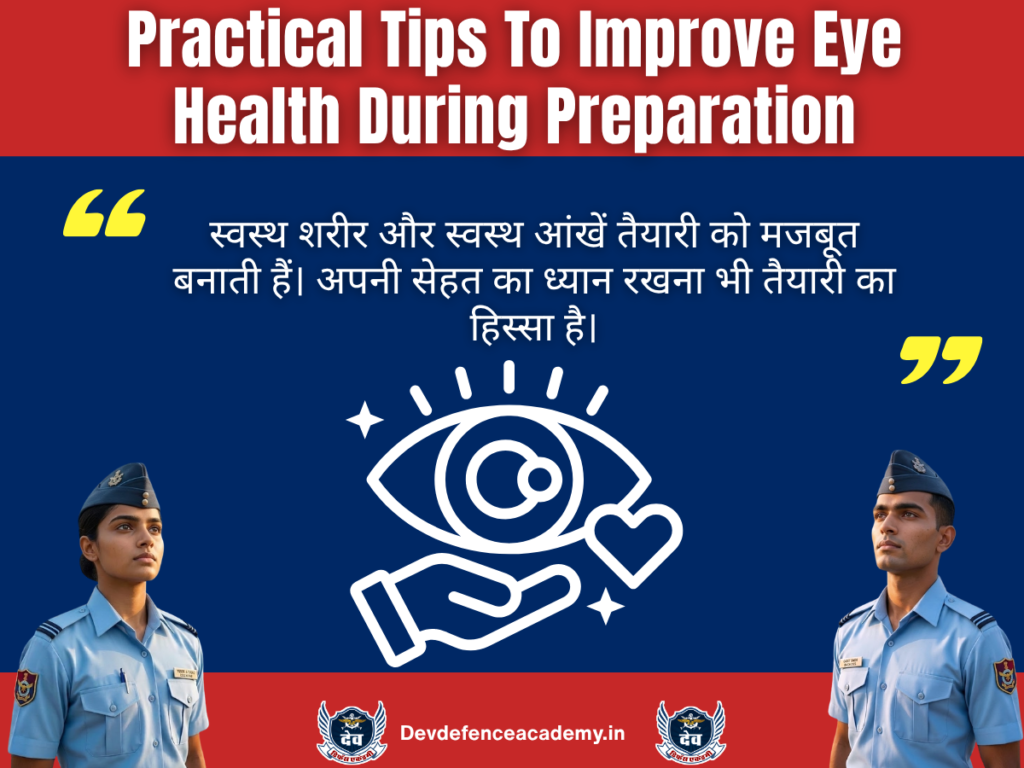
Healthy habits may not change major medical conditions, but they help maintain stable eye performance.
Small daily discipline creates long-term benefits during defence preparation.
Maintain Proper Hydration
Drinking enough water helps reduce dryness and fatigue in the eyes.
Students studying for long hours should stay hydrated throughout the day.
Follow Balanced Nutrition
Green vegetables, fruits, and protein-rich foods support overall health and eye function.
Unhealthy late-night routines often affect concentration and recovery.
Take Regular Study Breaks
Continuous screen exposure increases strain and discomfort.
Short breaks between study sessions help relax eye muscles naturally.
Conclusion
Air Force medical test eyesight standards and common rejection reasons should never be ignored by defence aspirants.
A candidate may perform well in written exams and physical tests, but medical fitness remains equally important for final selection.
Students who understand the vision standards early, follow disciplined habits, and prepare realistically have a much better chance of clearing the medical stage confidently.
If you need structured preparation and proper defence guidance, connecting with Dev Defence Academy can help you prepare in a more organized and focused way.
Final Thoughts
Air Force selection is not only about intelligence or physical strength. Medical fitness plays a major role in proving that a candidate is ready for service life.
Start checking your medical eli gibility early instead of waiting for the final stage. That simple step can save months of stress and uncertainty.
Stay disciplined, prepare honestly, and focus on gradual improvement every day. Consistency matters more than shortcuts in defence preparation.
FAQs
Can I join the Air Force if I wear glasses?
Yes, some Air Force entries allow candidates with glasses if the eye power stays within the allowed limit. The final decision depends on the medical category and entry type. Candidates with very high eye power may face rejection during the Air Force medical test eyesight standards check.
What is the most common reason for rejection in Air Force medical tests?
Weak eyesight and color blindness are among the most common rejection reasons. Many students also fail because of hidden eye problems or poor medical preparation. Getting a proper eye checkup before applying can help avoid surprises later.
Is LASIK surgery accepted in Air Force recruitment?
Yes, LASIK surgery may be accepted in some Air Force entries if certain medical conditions are met. The surgery should be stable and free from complications. Candidates should carry proper medical records during the examination.
How early should I prepare for the Air Force medical test?
Students should start preparing at least 4 to 6 months before the medical stage. This gives enough time to improve fitness, sleep routine, and overall health. Early preparation also helps students understand Air Force medical test eyesight standards and common rejection reasons clearly.
Can girls apply for Air Force technical and non-technical posts?
Yes, girls can apply for many Air Force entries if they meet the eligibility rules. They must clear the written exam, physical fitness test, and medical standards like other candidates. Proper preparation and discipline are equally important for girls.
Does screen time affect eyesight during defence preparation?
Yes, long screen time can increase eye strain, headaches, and tiredness. It may not permanently damage vision quickly, but it can affect eye comfort during preparation. Students should take regular breaks and avoid using phones late at night.
What happens if I fail the Air Force medical test once?
It depends on the reason for rejection. Some students get temporary rejection and may appear again after recovery. Permanent rejection usually happens in serious medical conditions that do not meet Air Force standards.
Which coaching can help students prepare for Air Force medical and physical tests?
A structured coaching environment helps students prepare in a more disciplined way. Dev Defence Academy in Sikar has 15+ years of experience and guides students in written preparation, physical training, and defence-related medical awareness. Regular routines and fitness practice help students stay better prepared.
Can color blindness be treated before Air Force selection?
Most types of color blindness cannot be fully corrected through normal treatment. That is why students should get tested early before starting serious preparation. Early awareness helps candidates choose suitable defence entries wisely.
How can I improve my chances of clearing the Air Force medical test?
Maintain good sleep, healthy food habits, and regular exercise during preparation. Avoid smoking, junk food, and unhealthy routines before the medical examination. Many students at Dev Defence Academy follow disciplined schedules that help them stay physically and medically fit for defence exams.
Are contact lenses allowed during Air Force medical examination?
Candidates are usually tested without contact lenses during the medical process. Doctors need to check the natural vision condition properly. Students should avoid hiding their actual eyesight condition during the examination.
Is eyesight checked again after final selection in Air Force?
Yes, medical fitness may be reviewed again during training or joining procedures in some cases. Candidates must maintain their health and vision standards even after selection. Ignoring health after selection can create future problems.