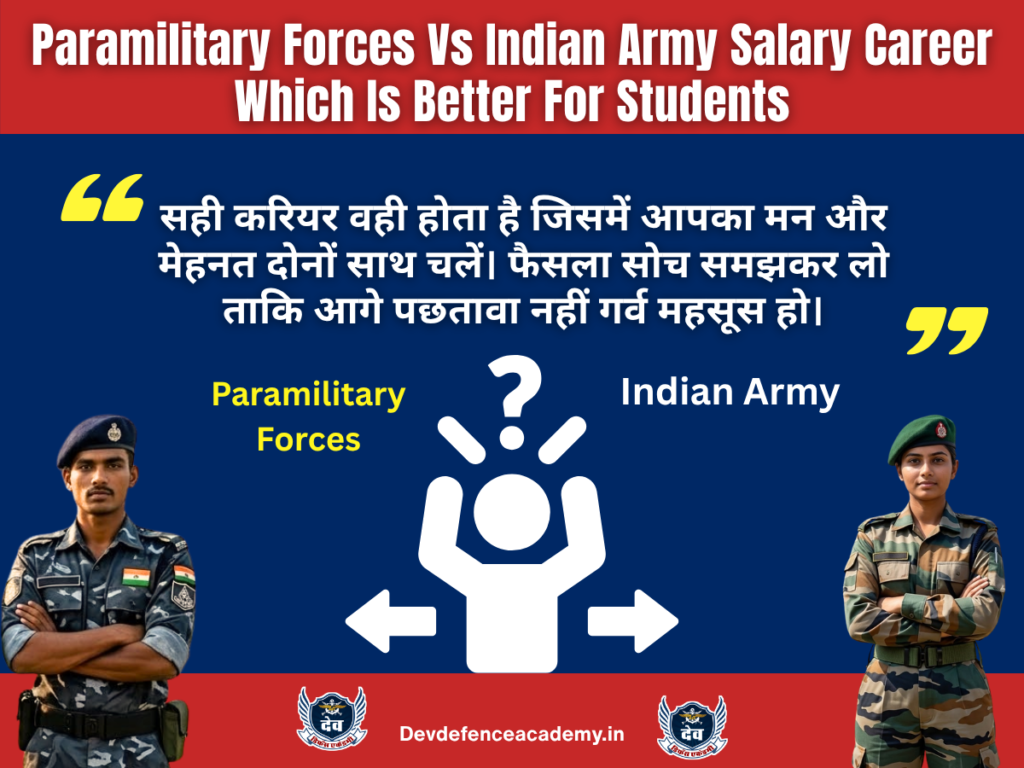
Paramilitary forces vs Indian Army salary career which is better is a common question among defence aspirants.
Both careers offer respect stable income disciplined life and the chance to serve the nation but the right choice depends on your goals lifestyle and long-term plans.
Many students preparing seriously for defence jobs choose structured guidance from Dev Defence Academy in Sikar Rajasthan because the academy has been established since 2011 and provides written plus physical training together.
This helps students understand both Army and paramilitary career paths clearly before making a decision.
Paramilitary Forces Vs Indian Army Salary Career Which Is Better For Students
The Indian Army and paramilitary forces both provide government jobs with strong security and benefits.
Still their work style training pressure promotion system and family life can feel very different after selection.
Students often compare only salary but career satisfaction depends on many other things.
Duty environment transfers promotion speed and personal interest matter just as much as monthly income.
The Indian Army mainly focuses on external security and warfare responsibilities. Paramilitary forces usually handle internal security border protection industrial security and law-and-order duties.
A student who enjoys high discipline field operations and combat-style service may prefer the Army.
Someone looking for slightly more stable postings and varied duty patterns may feel more comfortable in paramilitary services.
Read more:
- Best Paramilitary Forces Coaching In Sikar For Serious Aspirants
- How To Join Paramilitary Forces After 12th complete Guide
- Best Coaching In Sikar For Paramilitary Exams
Difference Between Indian Army And Paramilitary Forces
The Indian Army works under the Ministry of Defence. It protects the country during war military operations and national emergencies.
Paramilitary forces work under the Ministry of Home Affairs. These forces support internal security border management anti-riot duties and disaster response.
BSF guards international borders while CISF protects airports industries and metro systems. CRPF handles internal security and ITBP guards high-altitude border areas.
Army training is generally tougher and more combat-oriented. Paramilitary training is also disciplined but the role depends on the force and posting location.
The work culture also differs. Army life is deeply connected with military traditions strict command systems and continuous field readiness.
Paramilitary jobs may offer more variety in postings depending on the force. Some forces have urban deployments while others remain border-focused.
Indian Army Vs Paramilitary Salary Comparison
Salary is one of the biggest deciding factors for students. Both careers provide good starting pay along with government allowances and benefits.
An Army GD soldier usually starts with a salary package that becomes attractive after adding allowances like field area allowance ration medical support and transport benefits.
Paramilitary constables in BSF CRPF CISF and ITBP also receive solid salary packages. Their in-hand salary depends on posting location risk area and duty type.
In difficult areas both Army and paramilitary personnel receive extra benefits. High-altitude and risky zones increase overall earnings significantly.
Army personnel often get stronger military identity-related benefits and long-term pension advantages in some categories. However paramilitary employees also receive stable retirement and government support systems.
Students should understand that salary growth depends heavily on promotions and service years. A disciplined candidate can build a strong financial future in both careers.
Career Growth In Indian Army Vs Paramilitary
Career growth matters because a government job is a long journey not just a starting salary.
The Indian Army offers promotion opportunities through departmental exams service performance and seniority.
Motivated soldiers can rise through ranks with dedication and leadership qualities.
Paramilitary forces also provide promotions but timelines may differ between forces. Some students feel promotions can take longer depending on vacancies and department structure.
Army careers often include leadership development from an early stage. This builds confidence discipline and decision-making ability over time.
In paramilitary services career stability remains strong and promotions become smoother for candidates who stay physically fit and perform consistently.
A student who wants a highly structured military career may feel more connected to the Army system. Students preferring broader internal security roles may enjoy paramilitary service more.
Work Life And Family Life Comparison
Work-life balance is rarely discussed honestly but it affects long-term satisfaction deeply.
Army personnel may spend long periods in field areas remote locations or operational zones. This can create emotional challenges for family life.
Paramilitary personnel also face transfers and difficult postings but some forces provide comparatively stable urban or semi-urban postings during certain stages of service.
Leave availability depends on operational situations in both careers. During emergencies or national duties leave can become limited.
Army life demands stronger mental adjustment because field deployments can remain intense. Students who love adventure discipline and challenge often adapt well to this environment.
Paramilitary jobs may suit students who want defence service with slightly broader posting flexibility. Still every uniform service requires sacrifice commitment and physical fitness.
Which Career Has More Respect
Both careers command tremendous respect in society. Whether someone serves in the Army BSF CRPF or CISF people recognize the sacrifice and dedication involved.
In villages and small towns Army jobs often carry emotional pride because of military tradition and battlefield image.
Paramilitary forces are also highly respected especially among students aware of border security and anti-terror responsibilities.
Real respect comes from honest service and discipline not from comparing uniforms. A dedicated constable or soldier serving sincerely earns equal admiration from society.
Physical Difficulty And Training Level
The Army is usually considered more physically demanding because combat readiness remains central to daily life and operational preparation.
Training includes endurance drills weapon handling discipline exercises and field adaptation under difficult conditions.
Paramilitary forces also maintain strong physical standards. Running stamina and fitness remain essential throughout service life.
CRPF and ITBP can involve highly demanding operational duties depending on deployment areas. CISF duties may differ because of industrial and airport security responsibilities.
Students should prepare physically before applying to either career. Poor fitness is one of the biggest reasons candidates fail during recruitment stages.
Daily running proper diet and consistency matter more than short-term hard practice.
Which Career Is Better For Rural Students
Rural students often adapt very well to both Army and paramilitary environments because they already understand discipline hard work and physical activity.
The Army may feel more emotionally attractive for students from defence-family backgrounds. Many candidates grow up dreaming of military service from childhood.
Paramilitary jobs can become a practical choice for students wanting strong government security with multiple recruitment opportunities.
Exam difficulty also matters. Army GD recruitment focuses strongly on physical performance and basic written preparation.
Paramilitary exams may require slightly broader written preparation depending on the recruitment process and force category.
Students who start preparation early improve their chances greatly in both sectors.
Common Mistakes Students Make While Choosing
Many students select careers based only on social media videos or incomplete advice from friends.
Some believe Army salary is always much higher while others think paramilitary jobs are easier. Both assumptions are oversimplified.
Another mistake is ignoring lifestyle compatibility. A student uncomfortable with long field postings may struggle emotionally in intense military environments.
Some candidates also ignore physical preparation until the recruitment notification arrives. This creates panic and poor performance during physical tests.
Students should talk to experienced mentors and understand the actual work profile before deciding.
Preparation Strategy For Army And Paramilitary Exams
Preparation should begin with physical fitness because many candidates fail before reaching the written stage.
Daily running push-ups stamina exercises and body flexibility training create a strong foundation.
Written preparation should focus on mathematics reasoning general knowledge and current affairs. Consistency matters more than studying long hours randomly.
Mock tests improve speed and confidence. Students should also practice previous-year questions regularly.
Many aspirants prefer disciplined coaching environments because self-study alone becomes difficult without routine and guidance.
Dev Defence Academy has become a structured preparation option for many students because the institute combines hostel facility physical training mock tests and classroom preparation in one routine.
This helps students maintain consistency for long-term defence preparation.
How To Decide Which Career Is Better For You

Choose the Army if you want strong military culture combat-oriented service and high physical challenge.
Choose paramilitary forces if you want internal security roles multiple force options and comparatively varied posting patterns.
Both careers provide government security pride disciplined lifestyle and national service opportunities.
Do not choose based on pressure from relatives or social comparison. A career works best when your personality matches the job environment.
Spend time understanding your own strengths physical readiness and long-term goals before making a final decision.
Why Proper Guidance Matters
Defence preparation is not only about passing an exam. Students must develop discipline mental strength fitness and consistency together.
Without proper routine many aspirants lose motivation after a few months. This is why structured preparation environments become useful.
The academy in Sikar Rajasthan follows a disciplined daily routine and has guided many students through Army and paramilitary preparation over the years.
Students preparing seriously often benefit from learning in a focused environment with regular practice and mentoring.
Conclusion
Paramilitary forces vs Indian Army salary career which is better depends completely on your personality career goals and lifestyle preference.
Both careers provide respect stable income government benefits and the pride of serving the nation.
The Army may suit students seeking intense military life and combat responsibility. Paramilitary forces may suit students looking for strong government careers with varied operational roles.
Success in either path comes from discipline physical fitness and long-term consistency.
A focused student can build an excellent future in both services with the right preparation and mindset.
Final Thoughts
Do not rush while choosing between the Army and paramilitary forces. Understand the reality of the job instead of following social media opinions or emotional pressure.
A government uniform brings responsibility sacrifice and discipline. The right career is the one where you can stay committed proudly for many years.
Prepare seriously improve your fitness daily and stay mentally strong. Students who remain consistent during preparation usually create the strongest careers in defence services.
FAQs
Which is better for long-term career growth, Army or paramilitary forces?
Both careers offer stable growth and government benefits. The Indian Army may give faster leadership opportunities in some roles. Paramilitary forces also provide promotions, but growth speed can depend on the department and vacancies. Students should choose based on interest, not only salary.
Is paramilitary job safer than Indian Army service?
Paramilitary jobs can be safer in some postings, but not always. Forces like CRPF and BSF also work in risky areas and face difficult duties. Army life usually includes more combat-focused responsibilities and field operations. Every uniform service requires courage and discipline.
Can I join Indian Army or paramilitary after 12th?
Yes, students can apply for many Army GD and paramilitary recruitment exams after 12th. Some posts need only 10th pass qualification, while others require higher education. Physical fitness and medical standards are also very important during selection.
What is the salary difference between Army and paramilitary forces?
The salary difference is usually not very large at the starting level. Both careers provide basic pay, allowances, medical support, and pension-related benefits. In difficult areas, extra allowances can increase total salary. The real difference often comes from promotions and posting type.
How many months are needed to prepare for Army and paramilitary exams?
Most students need at least 6 to 12 months for serious preparation. Physical fitness takes time, especially running stamina and endurance. Written exam practice should happen daily along with current affairs and reasoning preparation.
Can girls apply for paramilitary and Army jobs?
Yes, girls can apply for many Army and paramilitary posts today. Opportunities have increased in forces like CISF, CRPF, and the Indian Army. Female candidates must also clear physical and medical tests according to official standards.
Which physical test is harder, Army or paramilitary?
The Indian Army physical test is often considered tougher because of combat-focused training. Paramilitary physical tests are also challenging and require good stamina. Running preparation is the biggest factor for success in both recruitment processes.
Is coaching necessary for Army and paramilitary preparation?
Coaching is not compulsory, but proper guidance helps many students stay disciplined. A good academy provides physical training, mock tests, and daily study routine together. Dev Defence Academy in Sikar is known among defence aspirants because of its 15+ years of experience and structured preparation system.
What are the common reasons students fail in defence recruitment?
Many students fail because they ignore physical preparation until the last moment. Some candidates also struggle in medical tests due to poor fitness or unhealthy habits. Lack of consistency in written preparation is another major reason for failure.
How can I start preparing for paramilitary forces vs Indian Army salary career which is better?
Start by understanding your own goals and lifestyle preference first. Learn about duty type, salary, promotion, and posting conditions in both careers. After that, build a daily routine for running, written preparation, and medical fitness.
Which coaching is good for Army and paramilitary preparation in Rajasthan?
Students usually prefer academies that provide both written and physical training together. Dev Defence Academy in Sikar is one such option with 1610+ selections and hostel facilities for defence aspirants. A disciplined environment helps students prepare more seriously for recruitment.