Indian Coast Guard Medical Standards for Navik and Yantrik entries require fitness assessed by authorised Defence or Service medical officers, with a common minimum height of 157 cm, at least 5 cm chest expansion, proportionate weight, normal hearing and entry-specific eyesight. Final eligibility depends on the standards stated in the active recruitment notification.
Check the notification for your exact entry before relying on familiar figures, particularly for vision and spectacles. Prepare your documents and resolve minor dental, ENT or other treatable problems before reporting for the authorised medical examination.
Indian Coast Guard Medical Standards: Complete Guide for Candidates

The Coast Guard medical is an entry-fitness assessment, not a routine certificate from a private doctor. The examining medical officers consider measurable standards as well as the candidate’s eyes, ears, teeth, cardiovascular health, nervous system, mental health and musculoskeletal condition.
An initial medical examination is conducted during the selection process, followed by a final enrolment medical at the designated Service medical centre. A private pre-screening can identify possible problems, but only the authorised medical board can declare a candidate medically fit for enrolment.
Which Coast Guard Entries Are Covered?
The enrolled-personnel standards cover Navik General Duty, Navik Domestic Branch and Yantrik recruitment. The broad assessment areas are similar, but entry-specific requirements can differ.
Vision limits, colour perception requirements and rules concerning spectacles are among the details that may vary by entry and recruitment cycle. The table or medical paragraph in your active notification is therefore the final reference.
- Navik General Duty: Check the notification carefully for unaided and corrected eyesight requirements.
- Navik Domestic Branch: Confirm the standards stated for the specific batch rather than applying another entry’s figures.
- Yantrik: Review its separate vision and corrective-glasses conditions in the current advertisement.
Key Measurable Medical Standards
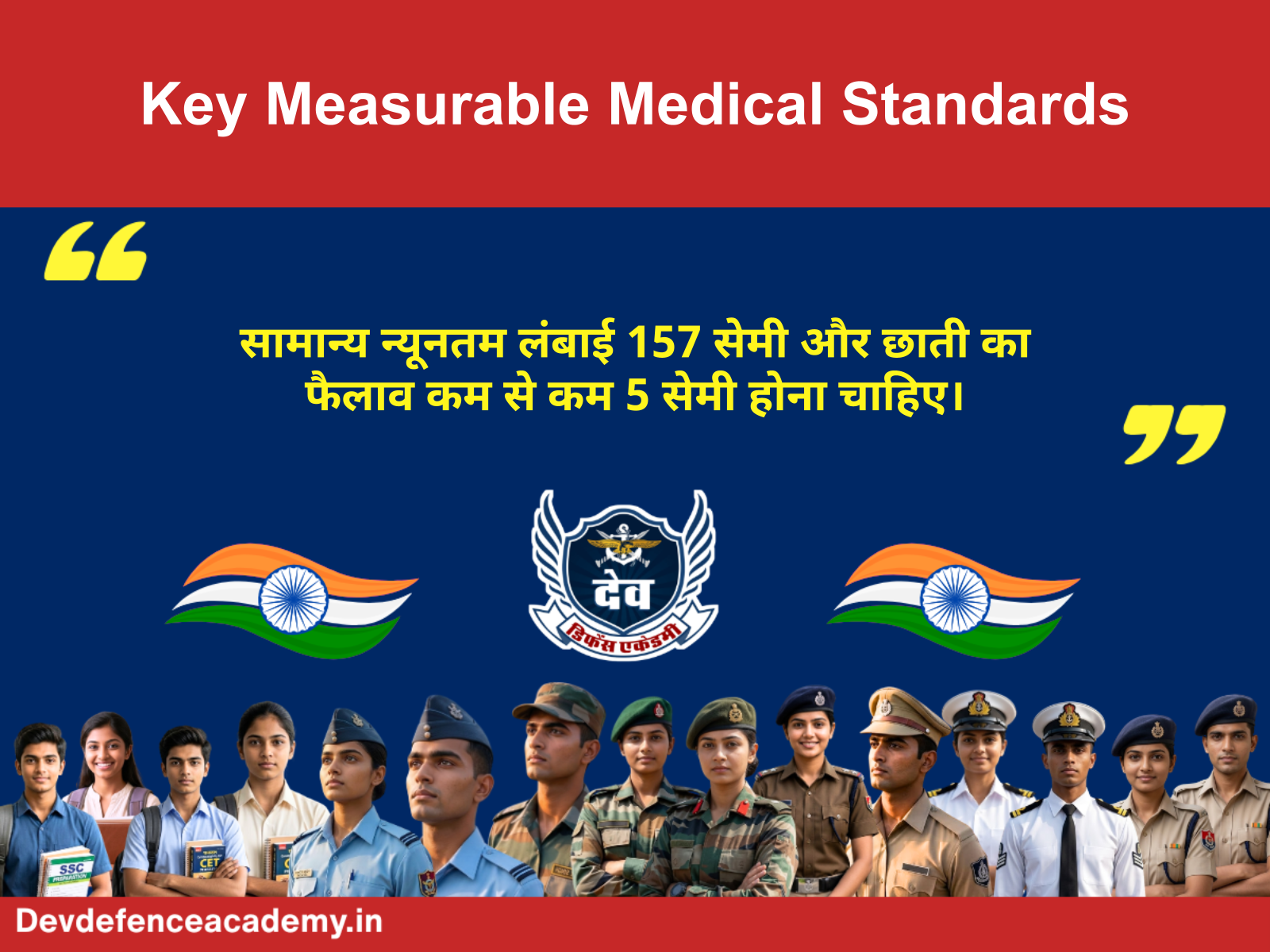
Candidates should check the measurable requirements early because height, chest expansion and certain eyesight conditions cannot be changed through short-term preparation. Measurements are taken by the authorised medical staff, not accepted merely from an outside report.
The following figures reflect the common enrolled-entry standards in official Coast Guard material. Any batch-specific provision in the active notice takes priority.
- Height: The common minimum is 157 cm. A relaxation of up to 5 cm may apply to candidates domiciled in specified regions, including notified North-East areas, Garhwal, Kumaon and Andaman and Nicobar, subject to valid domicile proof.
- Chest: The chest should be well proportioned, with at least 5 cm expansion between expiration and full inspiration.
- Weight: Body weight must be proportionate to height and age. Official recruitment material commonly mentions a tolerance of approximately ±10%, but the examining board and current notice govern the assessment.
- Vision: Exact unaided and corrected acuity differs by entry. Historical notices have included figures around 6/24 unaided and corrected standards such as 6/9 and 6/12 for certain entries, but these are examples rather than universal cut-offs.
- Colour perception: Candidates must meet the colour-vision category prescribed for their entry, which may specify normal colour perception or CP-II.
- Hearing: Clinically normal hearing is required. Impacted ear wax or an active infection can interfere with examination and should be treated beforehand.
- Dental and ENT health: Active dental or ENT problems may lead to an adverse finding or further review. Coast Guard instructions advise candidates to have their ears cleaned and dental tartar removed before medical examination.
A history of LASIK, PRK or another corrective eye operation is normally disqualifying. Do not undergo an elective procedure merely to meet a visual standard without first understanding the official rule and its effect on eligibility.
Tattoos, Skin Markings and Permitted Concessions
Permanent tattoos are generally prohibited, with limited concessions under the official Coast Guard tattoo policy. Tattoo content, location and the candidate’s eligibility for a notified tribal or area-based concession can all be examined.
For candidates outside the notified concessions, permitted permanent tattoos are generally restricted to the inner forearm, from the inside of the elbow to the wrist, and the reverse side of the palm or back of the hand.
- Read the tattoo policy attached to or referenced by the current recruitment notice.
- Carry the original tribal certificate and copies when claiming a tribal concession.
- Carry any other documentary proof required by the notice for an area-based exemption.
- Do not assume that a small, old or covered tattoo will automatically be accepted.
Common Disqualifying Conditions and Restrictions
The medical board considers whether a condition could interfere with training, sea duty or Service responsibilities. Diagnosis, severity, treatment history and functional effect may all matter, so a private doctor’s general fitness note cannot guarantee acceptance.
Common concerns include the following conditions, although the authorised board makes the individual decision under the applicable standards.
- Cardiovascular disease or a clinically significant cardiac abnormality.
- Epilepsy, fits or a relevant neurological history.
- A major psychiatric history that conflicts with entry standards.
- Corrective ocular surgery such as LASIK or PRK.
- Significant orthopaedic deformity, including severe knock knee or uncorrected flat feet where function is affected.
- Major surgery, residual deformity or loss of function relevant to Service duties.
- Varicose veins where the applicable medical standard treats the condition as disqualifying.
- Active systemic, dental, ear, nose, throat or skin disease requiring assessment or treatment.
Candidates previously declared permanently unfit for the same entry in Armed Forces or Coast Guard recruitment should follow the application guidance in the current notification.
Initial Medical, Final Medical and Appeals
The first authorised medical normally takes place during the selection process. Candidates who progress may undergo final enrolment medical examination at the designated Service medical centre; for many batches, this has been conducted at INS Chilka.
The final venue, reporting instructions and sequence are specified for the particular batch. A favourable earlier examination does not remove the requirement to meet the standards at the final medical.
- Initial examination: Authorised medical officers assess the candidate against the enrolled-entry standards.
- Medical finding: The candidate is informed of the board’s fitness decision and any further procedure applicable to the finding.
- Review or appeal: If the notification permits re-examination or appeal, follow the stated method, medical centre and deadline exactly.
- Final enrolment medical: The designated Service medical authority confirms fitness before enrolment and training.
Appeal windows and review procedures are batch-specific. Do not delay while seeking an informal opinion; read the written medical instructions and act within the period stated there.
Four-Week Pre-Medical Preparation Plan
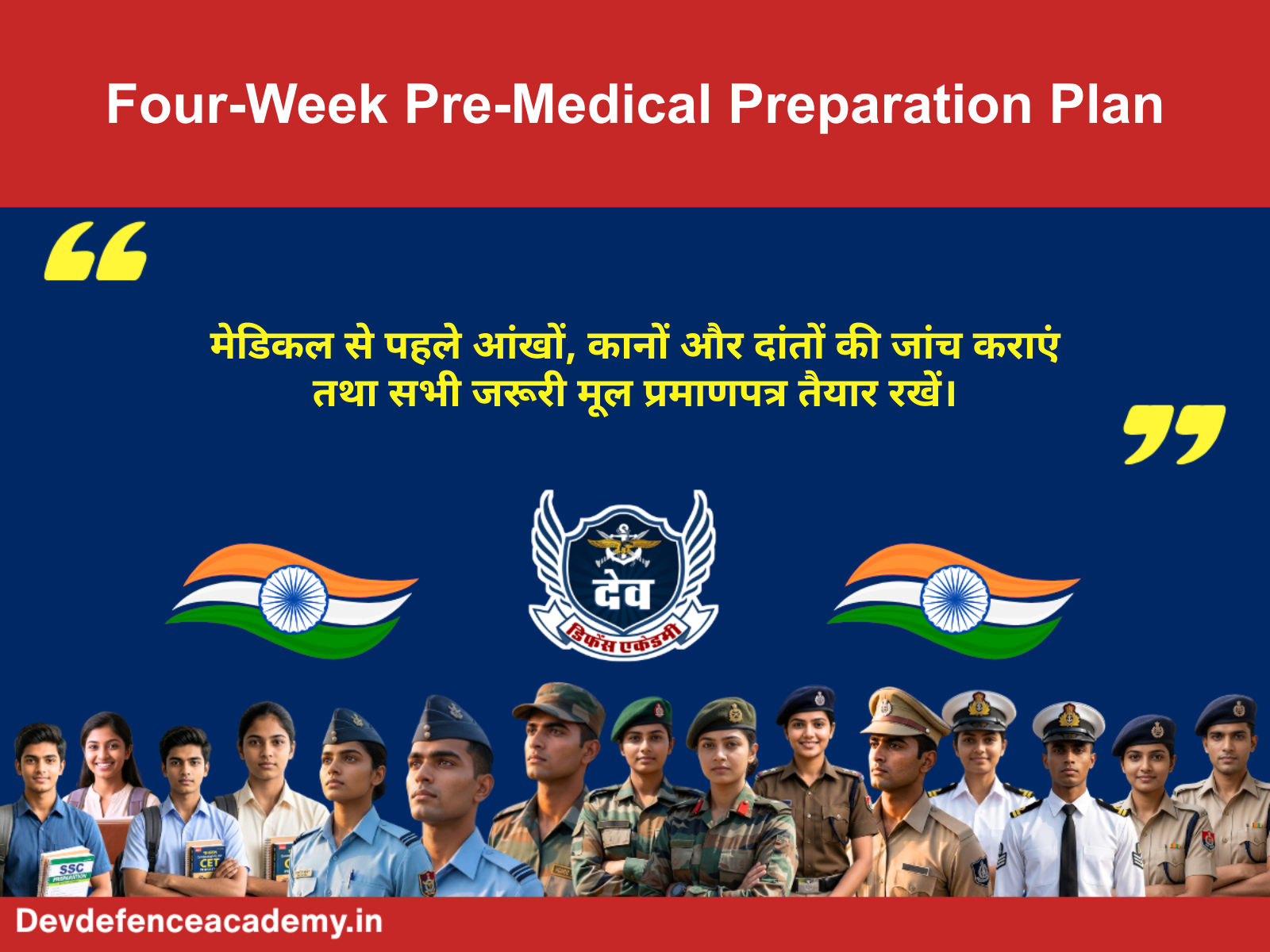
Start three to six weeks before the expected medical date. The aim is to discover genuine health issues early, complete reasonable treatment for minor conditions and arrive with the required original documents.
Dev Defence Academy supports aspirants through Sikar-based, in-person preparation, monitored physical conditioning and pre-medical documentation checklists. Established in 2011, the academy also provides personal guidance, regular tests and a disciplined routine without claiming to replace the authorised medical board.
Week 1: Check the Rule and Collect Records
- Download and read the active notification for your entry and batch.
- Check the exact vision, colour perception, height and tattoo provisions.
- Collect domicile or tribal certificates if claiming a relaxation or concession.
- Arrange relevant prescriptions, investigation reports and previous medical or surgical records.
Week 2: Complete Basic Screening
- Visit an MBBS doctor or physician for a general health examination.
- Get an ophthalmology assessment recording unaided and corrected visual acuity and refractive error.
- Tell the eye specialist about any previous ocular operation rather than concealing it.
- Have an ECG or specialist assessment if symptoms or the screening physician indicate a need.
Week 3: Address Treatable Findings
- Visit an ENT specialist for impacted wax, infection or hearing concerns.
- Obtain dental scaling and treatment for active cavities or infection.
- Complete advised follow-up and retain treatment records.
- Continue sensible conditioning while avoiding last-minute overtraining or injury.
Week 4: Prepare for Reporting
- Arrange originals and copies in the order required by the call instructions.
- Carry domicile proof, tribal documentation and relevant prior medical records.
- Sleep adequately and maintain normal food and hydration habits.
- Report as instructed without using unprescribed medication to alter a measurement.
Medical Mistakes That Cost Candidates Time
Many avoidable problems come from preparing against old information or arriving without supporting documents. These mistakes can prevent a relaxation from being granted or create a medical issue that could have been treated earlier.
Use the active notification as your checklist and avoid these errors:
- Assuming that Navik General Duty, Navik Domestic Branch and Yantrik have identical vision rules.
- Using an old recruitment notice for eyesight, tattoo or appeal requirements.
- Claiming height relaxation without the required original domicile certificate.
- Claiming a tribal tattoo concession without valid documentary proof.
- Reporting with untreated ear wax, dental tartar, active cavities or infection.
- Hiding previous surgery or a relevant medical history from the examining officers.
- Missing a review deadline after being declared medically unfit.
Where to Verify the Latest Official Rules
Use the official Coast Guard recruitment portal for the active CGEPT notification, entry-specific career information and attached medical documents. The Indian Coast Guard headquarters recruitment page is the second key source for current notices and instructions.
For tattoos, read the official tattoo policy referenced by the recruitment notice. Medical-board administration and review instructions should be checked in the batch documents and applicable Coast Guard medical directions rather than inferred from an older advertisement.
Related Guide by Dev
- Indian Coast Guard Eligibility 2026: Complete Guide
- Indian Coast Guard Physical Standards: Height, PFT, Vision
- SSC GD Medical Standards: Complete Candidate Guide
FAQs
What Is the Minimum Height for Coast Guard Enrolled Entries?
The common minimum height is 157 cm. Relaxation of up to 5 cm may apply to candidates domiciled in specified regions, but it is granted only under the notification and against acceptable domicile proof.
Does LASIK or Corrective Eye Surgery Cause Disqualification?
Candidates with a history of LASIK, PRK or other corrective ocular surgery are normally not eligible under the published Coast Guard entry standards. Disclose the complete history during examination.
What Tattoos Are Permitted?
Permanent tattoos are generally prohibited except under the official policy. For other candidates, permitted locations are normally limited to the inner forearm and the reverse side of the palm or back of the hand.
How Do Tribal Tattoo Concessions Work?
Limited concessions may apply to candidates belonging to notified tribes or areas under Government rules. Carry the original tribal certificate and every supporting document required by the recruitment notice.
How Are Chest and Weight Assessed?
The chest must be well proportioned with at least 5 cm expansion. Weight should be proportionate to height and age, with approximately ±10% commonly mentioned, subject to the active notice and medical board.
What Are Common Reasons for Medical Disqualification?
Common concerns include cardiovascular disease, epilepsy or fits, significant psychiatric history, corrective eye surgery, major deformity, relevant functional limitations, varicose veins and active systemic disease.
Where Is the Final Medical Conducted?
It is held at the designated Service medical centre stated for the batch. INS Chilka has been the final medical location for many batches, but candidates must follow their current reporting instructions.
Can I Appeal If I Am Declared Medically Unfit?
A review or appeal may be available according to the type of finding and the recruitment notice. Follow the stated procedure, venue and deadline immediately after receiving the decision.
Which Documents Should I Carry?
Carry all originals required by the reporting instructions, plus domicile proof for height relaxation, tribal documents for a tattoo concession and relevant previous medical, surgical or specialist records.
Final Thoughts
Indian Coast Guard Medical Standards reward early, honest preparation. Confirm the rule for your exact entry, arrange supporting certificates and complete a physician, eye, dental and ENT check before the authorised examination.
Students preparing at Dev Defence Academy in Sikar can follow a disciplined physical routine and receive practical guidance on notification checks and pre-medical documentation. The final decision always remains with the authorised Service medical board.


Pingback: Air Force Medical Standards for Girls: Complete Guide - Dev Defence Academy