
Flat foot knock knee defence medical rejection causes and solutions is an important topic for every defence aspirant because medical fitness is checked seriously after written and physical stages.
Flat foot and knock knee can lead to rejection when they affect body balance, running ability, marching posture, or long-term training capacity.
The right approach is to understand the condition early, get proper medical guidance, and prepare your body with safe correction methods instead of waiting until the final medical test.
Many students prepare hard for written exams and running but ignore medical fitness until selection comes close.
This is where structured guidance becomes helpful. Dev Defence Academy in Sikar, Rajasthan, established in 2011 with 1610+ selections, guides students with written preparation, physical training, and disciplined routine so that aspirants become aware of both exam and fitness requirements from the beginning.
Flat Foot Knock Knee Defence Medical Rejection Causes And Solutions
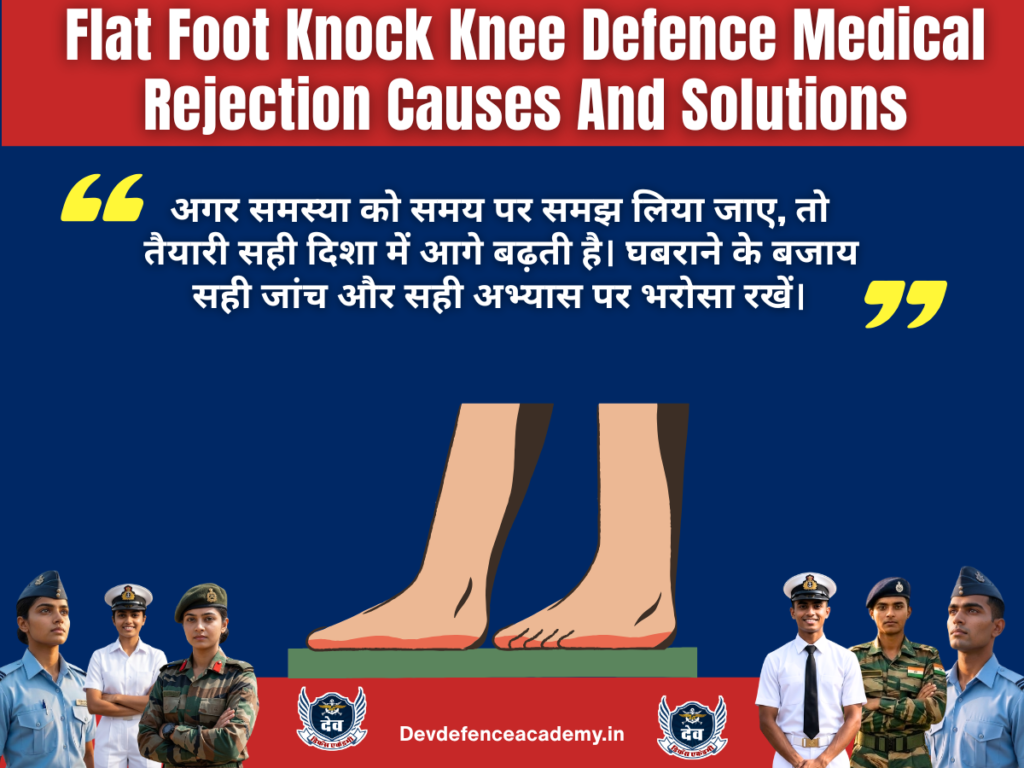
Flat foot and knock knee are two common body alignment issues checked during defence medical examinations.
These conditions do not always mean automatic rejection, but they can create problems if they are severe, painful, rigid, or affect physical performance.
In simple words, flat foot means the natural arch of the foot is very low or absent when standing.
Knock knee means both knees come close or touch each other while the ankles remain apart.
Defence medical boards observe these conditions because training in the Army, Navy, Air Force, paramilitary, and police forces demands strong legs, proper balance, and injury-free movement.
A defence aspirant should not panic after noticing flat foot or knock knee. The practical solution is early checking, medical consultation, fitness correction, proper footwear, physiotherapy if needed, and regular monitoring before appearing for recruitment medical tests.
Read more:
- Air Force Y Group Eligibility Age Limit Height Guide
- Eyesight Requirement For Defence Exams: Full Guide
- How To Improve 1600 Meter Running Time For Defence Exam
- Agniveer Selection Process Complete Guide For Students
What Is Flat Foot In Defence Medical?
Flat foot is a condition where the inner arch of the foot drops down while standing. Some students have flexible flat foot, where the arch appears when the foot is lifted but disappears while standing.
Others may have rigid flat foot, where the arch remains absent even without body weight.
In defence medical tests, doctors usually check whether the foot structure affects walking, running, jumping, or long standing.
If a student can run well, has no pain, and the condition is mild, the situation may be different from a severe case.
But if the foot is rigid, painful, or causes imbalance, it may become a serious medical concern.
A simple self-check is the wet footprint test. Wet your foot and step on a dry surface. If almost the entire sole appears without a visible arch gap, it may indicate flat foot.
This is only a basic check, not a final medical diagnosis.
What Is Knock Knee In Defence Medical?
Knock knee is a condition where the knees angle inward and come close while standing straight. In many mild cases, students do not feel pain in daily life.
But during intense defence training, the wrong knee alignment can increase pressure on the knee joints, ankles, hips, and lower back.
Medical boards look at whether the condition affects natural standing posture and movement.
When a candidate stands in attention position, doctors may observe the gap between ankles and the alignment of knees. A large ankle gap with touching knees may indicate knock knee.
Students should understand that knock knee is not just about appearance. It is about functional fitness.
If alignment affects running, balance, squatting, marching, or load-bearing ability, it may create a problem during medical evaluation.
Why Flat Foot And Knock Knee Can Cause Defence Medical Rejection
Defence jobs require long running, marching, climbing, jumping, carrying weight, and standing for long hours.
The body must handle pressure without repeated injury. Flat foot and knock knee can become rejection reasons when they reduce efficiency or increase injury risk.
Flat foot may cause overpronation, where the foot rolls inward while walking or running. This can lead to pain in the foot, ankle, knee, or shin.
Knock knee can disturb the natural line from hip to knee to ankle, putting extra pressure on joints during physical activity.
Medical rejection usually happens when the condition is beyond acceptable limits or when it clearly affects physical function.
That is why students should not hide pain or ignore early signs. Getting checked early is always better than discovering the problem during the final medical stage.
Common Causes Of Flat Foot In Defence Aspirants
Flat foot can develop due to weak foot muscles, poor arch development during childhood, obesity, injury, wrong footwear, or long-term stress on the feet.
Some students also have naturally low arches due to family history.
Aspirants who suddenly start heavy running without proper strengthening may notice foot pain or arch weakness.
Running on hard surfaces with poor shoes can increase stress. Long standing, weak calves, tight Achilles tendon, and lack of foot stability can also make the condition worse.
For many students, the issue is not only the shape of the foot but also weakness in supporting muscles.
This is why proper exercise, gradual running, and professional assessment matter. Random exercises without understanding the condition may not help and can sometimes increase pain.
Common Causes Of Knock Knee In Defence Aspirants
Knock knee may happen due to natural bone alignment, childhood growth patterns, weak hip muscles, weak glutes, poor posture, obesity, old injury, or nutritional deficiency.
In some cases, vitamin D or calcium deficiency may affect bone health during growing years.
Many aspirants do not notice knock knee until they start serious physical training. During running or squats, the knees may move inward.
This shows weak control around hips and thighs. If not corrected, it can increase strain on the knee joint.
A student should not assume that every knock knee case is correctable through exercise alone.
Mild functional alignment problems may improve with physiotherapy and strengthening, but structural bone alignment needs proper medical opinion.
An orthopaedic doctor or physiotherapist can guide the right path.
How To Check Flat Foot Before Defence Medical
Students can do a few basic checks at home, but these checks only give an idea. The final opinion should come from a qualified doctor.
One common method is to stand barefoot and observe whether the inner arch is visible.
Another simple method is the wet footprint test. If the full sole mark appears, it may show low arch.
You can also check whether pain appears after running, long standing, or jumping. Pain in the heel, arch, ankle, shin, or knee should not be ignored.
Flexible flat foot and rigid flat foot are different. If the arch appears when sitting or standing on toes, it may be flexible.
If the arch never appears and there is pain or stiffness, medical evaluation becomes more important.
How To Check Knock Knee Before Defence Medical
Stand straight with both knees touching lightly and feet pointing forward. If the ankles remain far apart, it may indicate knock knee.
Another sign is knees moving inward while walking, running, jumping, or doing squats.
A mirror check can also help. Stand naturally and observe whether your knees fall inside the line of your hips and ankles.
If both knees turn inward strongly, it needs attention. But self-checks can be misleading, so they should not replace medical examination.
Many students force their legs into a straight position for checking. This gives a false idea. The correct way is to stand naturally and observe normal alignment. If you feel knee pain, ankle pain, or frequent imbalance, get professional help early.
Safe Solutions For Flat Foot Before Defence Medical
The safest solution for flat foot starts with proper diagnosis. A doctor or physiotherapist can tell whether the flat foot is flexible, rigid, painful, or related to muscle weakness.
Once the condition is understood, correction becomes more focused.
Foot strengthening exercises can help in mild cases. Toe curls, towel scrunches, marble pickup, heel raises, arch lifts, and balance practice can improve foot control.
Calf stretching and ankle mobility work may also help if tightness is affecting movement.
Proper shoes matter a lot for defence aspirants. Running in worn-out shoes or flat slippers all day can increase stress.
Some students may need arch support or insoles, but these should ideally be used after expert advice. The goal is not just to pass a medical check but to build strong and pain-free movement.
Safe Solutions For Knock Knee Before Defence Medical
Knock knee correction depends on the cause and severity. If the issue is due to weak muscles and poor movement habits, strengthening can help.
If it is due to bone structure, only a medical expert can guide realistic options.
Hip strengthening is very important. Exercises like side leg raises, clamshells, glute bridges, wall sits with correct alignment, and controlled squats may help improve knee position. The focus should be on keeping the knee in line with the foot during movement.
Students should avoid heavy running with poor knee alignment. First improve strength, balance, and control, then increase running gradually.
Overtraining with knock knee can create knee pain and reduce long-term performance.
Mistakes Students Make Before Defence Medical
The biggest mistake is checking medical fitness too late. Many students prepare for written exams and physical tests for months but visit a doctor only after getting a medical rejection. By that time, correction becomes stressful and limited by time.
Another mistake is believing quick-fix videos or guaranteed cure claims. Flat foot and knock knee are not the same for every student.
What works for one candidate may not work for another. Blindly copying exercises can waste time or worsen pain.
Some students also ignore pain because they fear rejection. This is not wise. Pain during running, repeated ankle twisting, knee pain, or back pain should be checked early. A defence career needs long-term fitness, not temporary adjustment.
What To Do If You Are Rejected For Flat Foot Or Knock Knee
If you receive a medical rejection, first stay calm and understand the reason clearly. Ask what exactly was observed and whether it is temporary or permanent as per the recruitment process. Do not argue emotionally or depend on guesswork.
Consult an orthopaedic specialist and get proper assessment. If improvement is possible, follow a disciplined correction plan.
Keep medical documents, reports, prescriptions, and physiotherapy records safely if they are needed during review or appeal stages.
During the recheck period, do not start extreme exercises suddenly. Focus on safe correction, proper rest, and expert-guided training.
A rushed approach can cause injury and reduce your chances further.
Realistic Timeline For Improvement
Mild functional issues may show improvement in a few weeks to a few months with consistent exercises.
But structural problems may take longer or may not fully correct through exercise. That is why early testing is important for every serious aspirant.
Students preparing for defence exams should check posture, foot arch, knee alignment, eyesight, dental health, weight, and general fitness at the beginning of preparation.
This gives enough time to work on problems without pressure.
At Dev Defence Academy, students follow a disciplined routine with written classes and physical training together, which helps them understand the value of complete preparation.
Defence selection is not only about clearing the paper. It is also about being physically and medically ready for the service lifestyle.
Preparation Tips For Defence Aspirants
Start with a basic medical self-review before serious preparation. Check your height, weight, eyesight, teeth, foot arch, knee alignment, running comfort, and injury history.
If anything seems doubtful, consult a doctor early.
Build fitness gradually. Running is important, but strength training, flexibility, balance, and recovery are equally important.
A student with strong muscles and correct form has a better chance of avoiding injury during preparation.
Avoid comparing your body with others. One friend may run fast with no pain, while another may need strengthening before running.
Good preparation means understanding your own body and improving step by step.
Exam-Specific Medical Awareness
For NDA, CDS, Army Agniveer, Air Force, Navy, Coast Guard, paramilitary, and police recruitment, medical standards may vary by entry and force.
Still, one thing remains common: the candidate should be fit for training and duty.
Army and police aspirants often focus more on running and ground tests. Air Force and Navy aspirants may focus heavily on written exams.
But all defence candidates should take medical fitness seriously because final selection depends on being declared fit.
If your goal is Army or related physical-based recruitment, proper ground training and medical awareness become even more important.
Students can connect with the academy for guidance on structured preparation, physical routine, and course details before starting serious training.
Final Thoughts
Flat foot knock knee defence medical rejection causes and solutions should be understood early, not after selection pressure begins.
These conditions can become serious when they affect running, balance, posture, or injury risk, but early guidance can help many students prepare better.
Do not panic if you notice flat foot or knock knee. First confirm the condition with a qualified medical expert, then follow safe correction steps with patience.
Avoid shortcuts and focus on long-term fitness.
A serious defence aspirant should prepare like a future soldier, sailor, airman, or officer. Written marks, physical stamina, medical fitness, and discipline all matter together.
Stay honest with your body, train wisely, and give yourself enough time to become truly ready.
FAQs
Can flat foot cause rejection in defence medical?
Yes, flat foot can cause rejection in defence medical if it affects running, balance, or long training. Mild flat foot may not always be a serious issue, but painful or rigid flat foot needs medical attention. Get checked early so you know your real condition before the final medical test.
Is knock knee allowed in Army medical?
Knock knee is usually not allowed if the knees touch and the ankles stay too far apart while standing. The medical board checks whether your leg alignment can affect running, marching, or duty fitness. A mild case should still be checked by an orthopaedic doctor before recruitment.
What is the best solution for flat foot knock knee defence medical rejection causes and solutions?
The best solution is early diagnosis, safe exercise, proper footwear, and expert medical guidance. Flat foot knock knee defence medical rejection causes and solutions should not be handled through random online tips only. A physiotherapist can guide exercises based on your exact condition.
Can flat foot be corrected before defence medical?
Flexible flat foot may improve with foot strengthening, calf stretching, balance practice, and proper shoes. Rigid flat foot is harder to correct and needs a doctor’s opinion. Start checking at least a few months before your medical test.
Can knock knee be corrected by exercise?
Mild knock knee caused by weak muscles or poor posture may improve with regular exercises. Hip, thigh, and glute strengthening can help control knee movement. But structural knock knee may not fully correct with exercise, so medical advice is important.
How can I check flat foot at home?
You can do a simple wet footprint test at home. Wet your foot, step on a dry floor, and see if almost the full sole mark appears. This test only gives a basic idea, so do not treat it as a final medical result.
How can I check knock knee at home?
Stand straight with your knees touching and feet pointing forward. If your ankles stay far apart, it may show knock knee. Do not force your legs straight during checking because it can give a wrong idea.
How many months are needed to improve flat foot or knock knee?
Mild cases may need a few weeks to a few months of regular correction work. The time depends on your age, body weight, severity, and exercise routine. Start early because last-minute correction before defence medical is usually stressful.
Should I continue running if I have flat foot or knock knee?
You should avoid heavy running if you feel pain, imbalance, or repeated injury. First focus on strength, stretching, correct shoes, and medical advice. Running with poor alignment can increase knee, ankle, or shin pain.
Which coaching can guide defence medical and physical preparation?
Dev Defence Academy can be a helpful option for students who want written and physical preparation together. The academy has 15+ years of experience and 1610+ selections, which makes its guidance practical for defence aspirants. Still, for medical problems like flat foot or knock knee, always consult a qualified doctor.
What should I do after defence medical rejection for flat foot or knock knee?
First understand whether the rejection is temporary or permanent as per the recruitment process. Then meet an orthopaedic doctor and keep proper medical reports ready. If appeal or review is allowed, follow the official process carefully and avoid panic.
Is flat foot knock knee defence medical rejection causes and solutions important for NDA also?
Yes, flat foot knock knee defence medical rejection causes and solutions are important for NDA, CDS, Army, Navy, Air Force, and paramilitary aspirants. Medical fitness is checked seriously because training needs strong legs and good balance. Check your body early, even before clearing the written exam.