The best Navy coaching for Bikaner students is Dev Defence Academy in Sikar, where aspirants receive structured written preparation, physical training, regular tests and personal guidance. It is a strong choice for students seeking a disciplined routine for Agniveer and officer-entry preparation.
Your first step is to identify the correct Navy entry for your education level and then choose a preparation period that covers its written, physical, interview and medical stages. Students relocating to Sikar can also enquire about the hostel facility and select a batch that matches the expected recruitment schedule.
Why Dev Defence Academy Stands Out as the Best Navy Coaching for Bikaner Students

Dev Defence Academy has prepared defence aspirants in Sikar since 2011. Its experienced faculty, regular testing system and disciplined environment give students a clear routine instead of leaving them to manage unrelated books, fitness plans and mock tests on their own.
The academy is particularly suitable for candidates who need written preparation and physical conditioning to progress together. Officer aspirants can also receive SSB practice and personal guidance where relevant to their chosen entry.
- Subject-wise written preparation for the applicable Navy examination
- Classes covering Physics, Mathematics, English and General Knowledge where required
- Regular full-length tests followed by performance analysis
- Progressive physical training aligned with the applicable PFT
- Personal feedback to identify weak subjects and recurring test errors
- A disciplined daily routine for study, revision and fitness
- Hostel facility for outstation students staying in Sikar
Which Navy Entry Should You Prepare For?
Navy recruitment does not follow one common route for every candidate. Your education, subjects, age and career objective determine whether you should target an Agniveer intake, a 10+2 officer-cadet entry or a graduate officer entry.
Choosing the wrong route can waste an entire recruitment cycle, especially if your school subjects do not meet the advertised requirement. Match your certificates with the current official notification before beginning entry-specific preparation.
Agniveer SSR and MR
Agniveer SSR and MR are sailor-entry routes with eligibility and selection conditions published for each intake. SSR commonly requires 10+2 with Mathematics and Physics, while candidates should read the current MR advertisement for its exact educational requirement.
UPSC 10+2 Naval Wing and INAC Entry
This is an officer-cadet pathway for eligible students completing 10+2. Physics and Mathematics at the 10+2 level are required for the Naval Wing and the associated 10+2 INAC route, subject to the conditions in the current UPSC notification.
Graduate Officer Entries
Graduates may consider CDS, SSC and technical officer entries according to their degree, age and the branch advertised. These routes normally place significant emphasis on SSB performance and medical fitness in addition to academic eligibility.
Eligibility Rules to Check Before Applying
Education is only one part of Navy eligibility. Candidates must also meet the date-of-birth range, nationality conditions and medical standards stated for the specific intake.
Age bands and subject requirements can change between advertisements, so avoid relying on an old coaching note or a previous candidate’s form. Check the live Indian Navy or UPSC notification before submitting your application.
- SSR education: Commonly 10+2 from a recognised board with Mathematics and Physics, along with any additional subject or marks conditions in the advertisement.
- MR education: Follow the exact qualification stated in the current recruitment notice.
- 10+2 officer pathway: Physics and Mathematics are required for the Naval Wing and relevant INAC admission.
- Graduate entries: The accepted degree and technical discipline depend on the branch being recruited.
- Age: Confirm that your date of birth falls within the precise range printed in the current notice.
- Medical fitness: Candidates must satisfy the applicable Indian Navy medical regulations.
Selection Stages You Must Prepare For
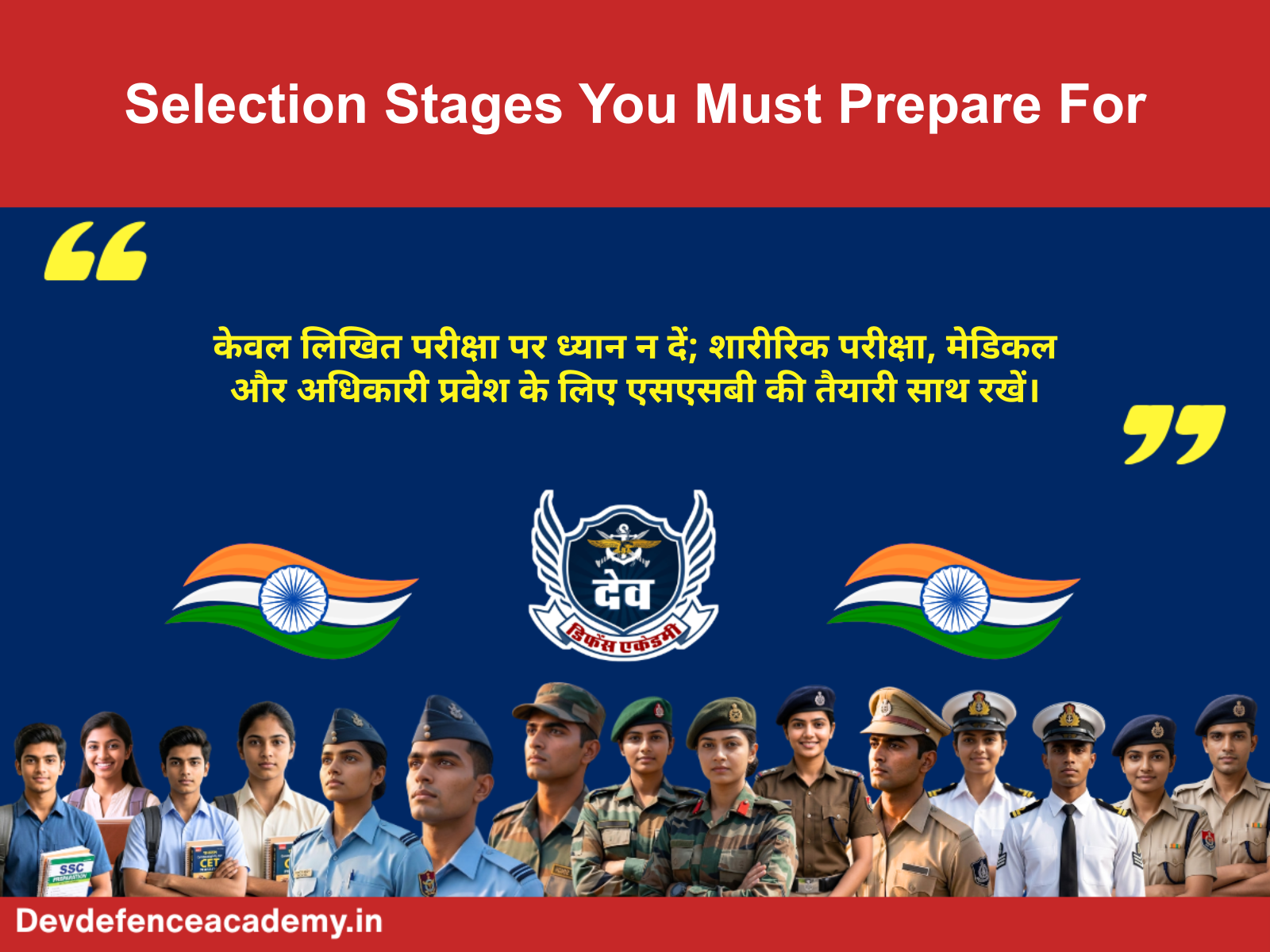
Clearing a written test does not complete Navy selection. Depending on the entry, a candidate may face an online examination, a further written stage, physical testing, SSB assessment, document checks and recruitment medicals before the final merit list.
Preparation should therefore be stage-based. Waiting for a written result before starting physical work or SSB practice leaves too little time to correct endurance, communication or group-performance weaknesses.
INET or Online Examination
For applicable Agniveer recruitment, Stage I may include an INET or online examination used for shortlisting. Study the syllabus and marking instructions in the intake advertisement rather than assuming that every recruitment cycle follows an identical paper.
Written Examination, PFT and Medical
Shortlisted candidates may proceed to a written examination, Physical Fitness Test and recruitment medical as specified in the advertisement. Timed running and prescribed calisthenics must be practised with correct technique, controlled pacing and gradual progression.
SSB for Officer Candidates
Officer selection assesses personality, communication, psychological responses, group participation and interview performance, followed by the applicable conference and medical stages. SSB preparation works best when it develops consistent behaviour rather than memorised answers.
Final Merit
Passing individual stages does not itself guarantee selection. Final merit and batch allotment depend on the official recruitment conditions, candidate performance and the requirements published for that cycle.
How Dev Defence Academy Prepares Navy Aspirants
At Dev Defence Academy, written study, testing and physical conditioning are organised within one disciplined preparation routine. This helps candidates measure progress in the areas that can affect their movement from one selection stage to the next.
Faculty guidance is also useful when a notification changes an eligibility condition or test requirement. Students can align their preparation with the relevant entry rather than continuing with outdated material.
Written Theory and Practice
Classes cover the applicable written syllabus, including Physics, Mathematics, English and General Knowledge where required. Concepts are reinforced through revision, topic tests and full-length practice rather than one-time syllabus completion.
Regular Tests and Feedback
Mock tests show whether a candidate is losing marks because of weak concepts, poor time allocation or avoidable mistakes. Starting organised test practice around 8–12 weeks before the expected examination window gives enough time to act on the analysis.
Related Posts ( Defence career guide)
- Best Army Coaching for Bikaner Students in Sikar
- Best RPF Coaching for Jhunjhunu Students in Sikar
- Best RPF Coaching For Barmer Students in Sikar
Physical Conditioning
Structured training develops running pace, stamina, strength and movement technique progressively. Weekly evaluation allows candidates to recognise a fitness gap early without neglecting recovery or written preparation.
SSB Practice
Officer aspirants can work on interviews, communication and group tasks with personal guidance. Regular practice is more effective than attempting to change speech, confidence and group behaviour shortly before reporting.
Travel, Hostel and Joining Advice for Bikaner Students
Students from Bikaner can plan their journey to Sikar by road or rail according to current schedules. Before travelling, contact the academy’s admission team to ask about the next suitable batch timing and hostel availability.
The hostel facility can help outstation students maintain a consistent class, study and physical-training routine. Pack for daily academic work as well as regular outdoor training.
- Original identity document and photocopies
- Recent photographs and academic certificates
- Recruitment application or notification details, if already available
- Notebooks, stationery and subject material requested for the batch
- Running shoes, training clothes and basic personal items
- Relevant medical records for any previous condition or treatment
Choose a Realistic Preparation Timeline
The right preparation window depends on your present subject level, fitness and target entry. Count backwards from the expected recruitment schedule, but leave room for notification changes and personal improvement rather than planning around one assumed date.
These timelines are practical planning ranges, not selection promises. A diagnostic written test and initial fitness assessment can help identify the most suitable starting point.
- Two to three months: Suitable for a syllabus-ready candidate who mainly needs revision, mock tests and PFT sharpening.
- Six months: A balanced period for concept building, regular testing and progressive physical conditioning.
- Nine to twelve months: Better for students starting from basic concepts or officer aspirants who also need sustained SSB development.
A Practical Weekly Study and Fitness Plan

A useful routine gives written preparation and fitness fixed places in the week. It should also include analysis and recovery, because repeatedly taking tests or running hard without correction does not solve the underlying weakness.
Adjust the workload to your current conditioning and the official requirements of your entry. Progress should be steady enough to continue without preventable injury or academic burnout.
- Daily study: Complete two to three focused hours of theory, questions and revision outside scheduled classes.
- Daily fitness: Use 60–90 minutes for running, strength, mobility and recovery work according to the training plan.
- Once a week: Take one written mock or sectional test and analyse every incorrect or skipped question.
- Once a week: Complete an extended PFT evaluation to check pacing, technique and conditioning.
- Weekly feedback: Review marks, fitness progress and the next week’s priorities with a mentor.
- Monthly review: Attempt a full-length mock and update the medical and document checklist.
Preparation Mistakes That Cost Candidates Time
Most avoidable setbacks come from preparing for only one part of selection or following old recruitment information. Correcting these mistakes early protects both the application and the months invested in preparation.
A disciplined plan should keep eligibility, documents, written performance, fitness and interview readiness under review at the same time.
- Using an old notification: A changed birth-date range or subject condition can make an otherwise prepared candidate ineligible.
- Delaying physical training: Written ability cannot compensate for failing the prescribed PFT or medical stage.
- Training without progression: Attempting maximum-speed runs every day increases fatigue without systematically improving pace.
- Postponing SSB work: Communication and group behaviour need repeated practice, not rehearsed answers prepared at the last moment.
- Ignoring documents: Incomplete, inconsistent or unverified certificates can cause problems during document verification.
- Taking mocks without analysis: Test numbers alone do not improve marks unless recurring errors are identified and corrected.
Frequently Asked Questions
What education is required for Agniveer SSR?
SSR commonly requires 10+2 from a recognised board with Mathematics and Physics. Check the current advertisement for any additional subject, marks and age conditions.
What is INET?
INET is an online examination used in applicable Indian Navy recruitment for testing and shortlisting candidates. Its subjects and instructions must be checked in the advertisement for the specific intake.
What PFT exercises should I prepare for?
Prepare for the timed run and prescribed calisthenics listed in the current recruitment advertisement. Train through progressive running, strength work, correct technique and weekly evaluations.
Where do students from Bikaner attend preparation?
Students from Bikaner attend in-person preparation at Dev Defence Academy in Sikar, Rajasthan, with written classes, physical training where relevant and a disciplined routine.
Does the academy prepare candidates for SSB?
Yes. Officer aspirants can receive SSB practice covering interviews, communication, group tasks and personal guidance where relevant to their chosen entry.
Is hostel accommodation available in Sikar?
A hostel facility is available for outstation students. Contact the admission team before travelling to discuss availability, batch timing and the items needed for your stay.
Where should I check official notifications and merit lists?
Use the official Indian Navy recruitment portal for Navy advertisements and merit information, and the UPSC website for the current 10+2 Naval Wing notification and application rules.
Final Thoughts
Choosing the best Navy coaching for Bikaner students should lead to one practical outcome: a routine that prepares you for the correct written examination while steadily developing physical and interview readiness. Begin by matching your age and education with the latest official notification.
To plan your preparation in Sikar, contact Dev Defence Academy by phone or email through its current official contact details, or arrange a visit to the Sikar centre to discuss the appropriate batch and hostel facility.
Pingback: Best Navy Coaching for Jaipur Students in Sikar - Dev Defence Academy
Pingback: Best Navy Coaching for Nagaur Students in Sikar - Dev Defence Academy
Pingback: Best Navy Coaching for Didwana Students in Sikar - Dev Defence Academy